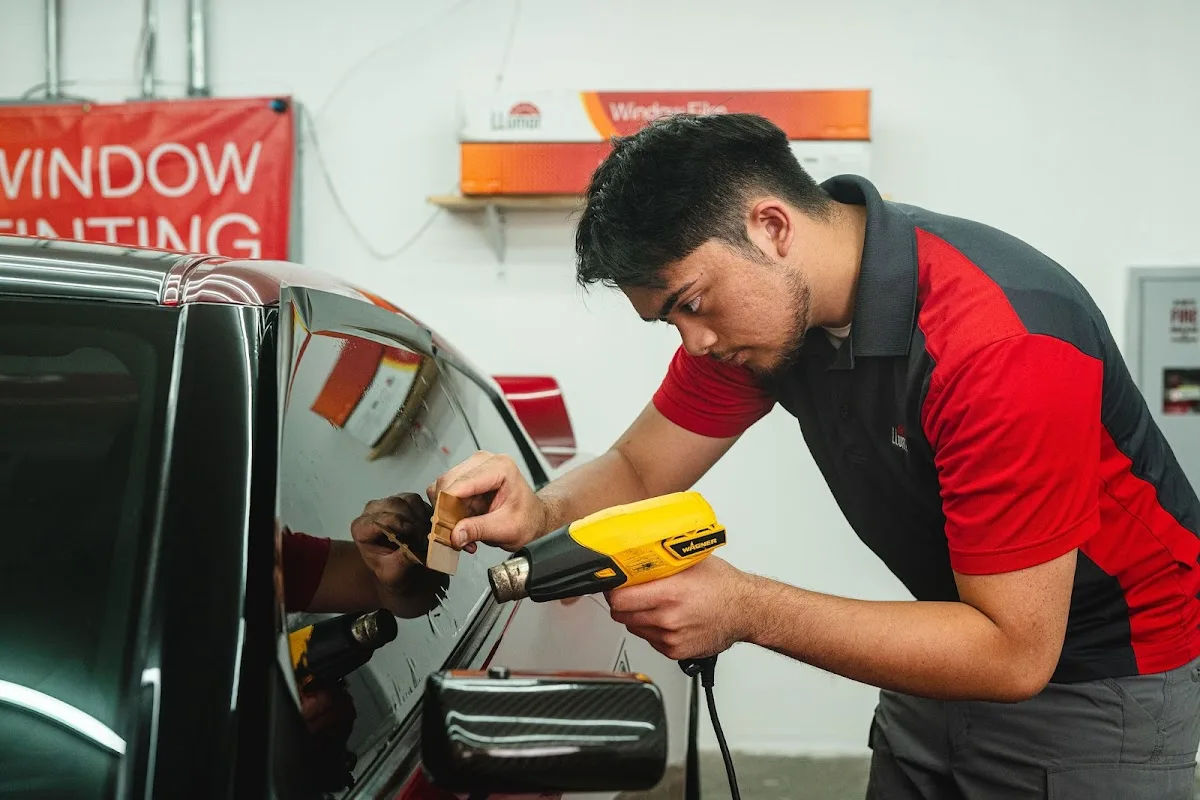
Ceramic Auto Tint Installer
Ohana Tinting
Ohana Tinting provides window tinting and automotive film services in Honolulu, HI. Its business information highlights Ceramic tint, UV protection, and Lifetime warranty. The location is shown at 733 Kopke St, Honolulu, HI 96819, United States. A phone number and website are available for current service, pricing, and scheduling questions.
What the shop and its customers describe
Ohana Tinting has a stated focus on Ceramic tint, UV protection, Lifetime warranty, Automotive ceramic tint and heat rejection, and UV protection and interior fade reduction as part of its window tinting and automotive film work. The relevant scope can depend on the requested service, location, timing, and the information supplied before an appointment or estimate. The street address shown for the business is 733 Kopke St, Honolulu, HI 96819, United States. Direct contact is available by phone and through the company website. Review recent terms and contact information directly when timing, travel, documents, property access, or payment details matter. Before arranging service, ask which film brands are used, how legal limits are handled, what warranty applies, and how curing or aftercare is explained. For project work, request a written scope that identifies materials, labor, timing, exclusions, and warranty terms. Clear written answers make it easier to compare the offering with the specific need.
What we have, where it came from
- Address
- 733 Kopke St, Honolulu, HI 96819, United States
- Phone
- +1 808-397-6470
- Website
- ohanatinting.com/
- Source depth
- 92 of 100
- Indexable
- Standalone profile
Tint rules in HI — and why the AS-1 line is universal
HI sits in the Mid-tier band. Most U.S. states sit between 30 and 50 percent on the front-window VLT minimum. The numbers vary state by state, so the safe move is to ask the shop to install at or above your state's legal floor and to check the most recent vehicle code text — laws change.
Across all fifty states, the only zone of the windshield where any non-reflective tint is legal is the strip above the AS-1 line — usually four to five inches at the top, marked on factory glass with a small "AS-1" etching. Below that line, windshield tint is not street-legal anywhere in the United States, regardless of state side-glass rules. A reputable shop will measure from the AS-1 line down before laying film, not from the top of the glass.
Laws change. Confirm the most recent VLT minimum directly with the shop and, when in doubt, with the most recent text of your state's vehicle code.
OpenStreetMap · drag to explore · Get directions
Six questions worth asking before the deposit
- Ask for the IRR and TSER numbers on the spec sheet.Heat rejection at a given VLT comes from infrared rejection (IRR) and total solar energy rejected (TSER). The shop's top ceramic line will publish both numbers. A dyed film and a top ceramic at the same VLT can differ by 30 percentage points on TSER.
- Read the lifetime warranty before signing.Most "lifetime" wording in tint covers fade, bubbling, peeling, and cracking — not stone chips, edge lift from worn window seals, or ammonia-cleaning damage. Some are original-owner-only; others transfer with a small fee. The transferable clause is what protects resale.
- Confirm the shop measures front-window VLT before install.A shop that measures with a photometer before installation is the one most likely to keep you legal in your state. If they ask you to sign that compliance is on the customer, that's a quiet yellow flag. Tint stops are 30–50 % on the front in HI.
- Ask the cure time and what to do during it.Newly installed film cures for 3 to 5 days in summer, 7 to 10 in winter. During cure, do not roll windows down — the film can shift and the squeegee margins can lift. Light hazing or small water bubbles in this window are normal and clear up; bubbles after 30 days are not.
- Verify the AS-1 line on your windshield before booking strip tint.Across all 50 states, the only zone of the windshield where any tint is legal is above the AS-1 line — usually marked with a small "AS-1" etching at the top of factory glass. Below the AS-1 line, no tint is street-legal anywhere in the U.S., regardless of your state's VLT rule on side glass.
- Pull a window seal vs. cut on glass — ask what the shop does.Cut-on-glass installs save 15 minutes but risk scoring the rubber seal with a razor. The cleaner method pulls the rear-side or rear-glass window down a half-inch so the cut happens off-glass. It costs the shop time, not money — confirm during the quote.
About this profile. Built from Ohana Tinting's public website and Google Maps page. Source depth 92 of 100. No referral fees, no advertorial. Tell us if anything is wrong and we'll fix it.
Tinting Hawaii
Tinting Hawaii provides window tinting and automotive film services in Honolulu, HI. Its business information highlights UV protection, Lif…
Honolulu, HIDiscount Window Tint Hawaii
Discount Window Tint Hawaii offers support related to window tinting and automotive film in Honolulu, HI, including Ceramic tint, No bubble…
Honolulu, HIT&T Tinting Specialists, Inc.
T&T Tinting Specialists, Inc. provides window tinting and automotive film services in Honolulu, HI. Its business information highlights Cer…
Honolulu, HIT&T Tinting Specialists, Inc.
T&T Tinting Specialists, Inc. offers support related to window tinting and automotive film in Honolulu, HI, including Ceramic tint, Heat re…
Honolulu, HIAl's Tinting Inc
Al's Tinting Inc offers support related to window tinting and automotive film in Honolulu, HI, including Ceramic tint, Premium film brand, …
Honolulu, HIWindow Tint Hawaii
Window Tint Hawaii provides window tinting and automotive film services in Honolulu, HI. Its business information highlights Ceramic tint, …