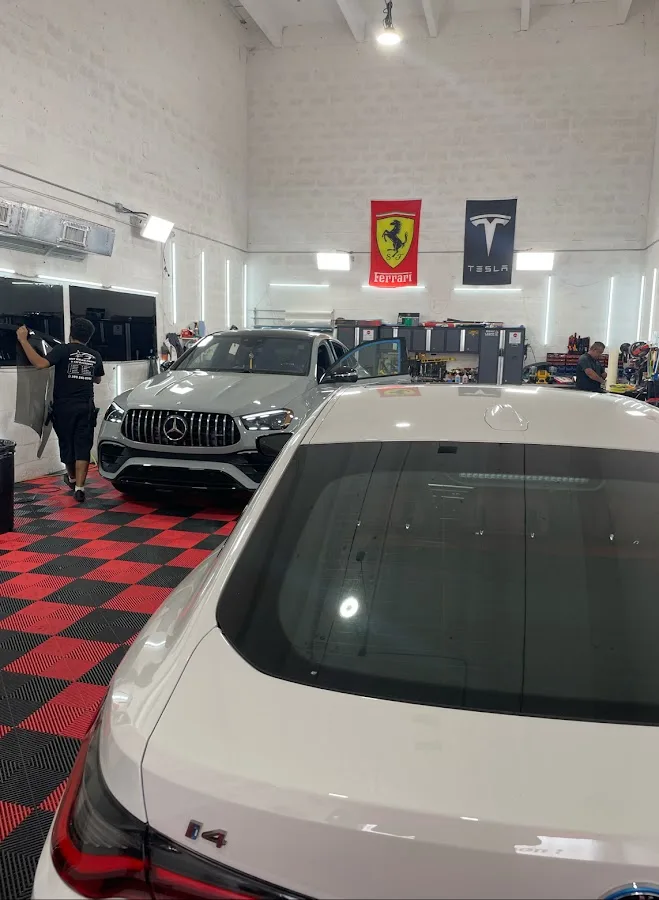
Window tint and paint protection film (PPF) solve different problems because they go on different parts of a car. Choose window film when your concern is sunlight passing through glass; consider PPF when you want a sacrificial layer over painted exterior panels exposed to road wear. They are not substitutes, and a car can use either one or both.
Start with the surface each film covers
Automotive window tint is a film treatment for glass, generally installed on the inside of the vehicle’s windows. It changes the light passing through those windows. Depending on the product and shade, owners may be comparing visible-light transmission, glare, appearance, privacy, or solar comfort. “Darker” describes how much visible light gets through, not every aspect of how a film performs.
PPF is applied to selected painted body panels rather than the windows. Often called clear bra film, it is intended to take some of the contact and surface wear that might otherwise reach the paint. It is not a window treatment and does not change the view through the cabin. Conversely, tint on the glass does not shield the hood or bumper from stones and scuffs. The first useful question is therefore not which product is better overall, but which surface needs attention.
Match the product to the problem you notice
If bright light, glare, or the cabin’s exposure to sunlight is the issue, compare window-film options for the relevant glass. Think about where the concern occurs: a driver bothered by glare through a side window has a different target from an owner choosing a consistent look across several windows. Shade and film construction are separate considerations, so a product name alone does not tell you how much visible light a finished window will transmit.
If the concern is physical exposure to painted surfaces, look at PPF coverage instead. A front bumper that frequently meets road debris presents a different exposure from a door panel that is more likely to encounter parking-lot scuffs. Tint will not protect those areas, while PPF will not solve a glare problem at the windshield or side glass. Say you mostly want to reduce reflections in the cabin: a body-panel film is the wrong category even if it is marketed as paint protection.
PPF should be understood as a protective layer, not an assurance that paint can never be damaged. Its practical role is to receive some surface wear; the specific coverage and product determine what is being treated. That distinction helps keep expectations tied to the actual panels rather than to broad phrases such as “full protection.”
Think in terms of coverage, not just product names
Many decisions are made window by window or panel by panel, rather than as one all-or-nothing vehicle package. A comparison can start with a simple map of the surfaces you care about:
| Concern | Surface to identify |
|---|---|
| Glare, visible light, or sunlight through the cabin | The specific windows and desired film characteristics |
| Road debris or scuffs on exterior paint | The painted panels exposed to that wear |
| Both kinds of concern | Glass for tint and painted panels for PPF |
For tint, note whether you are considering front side windows, rear glass, or another window; the desired appearance and light transmission may not be identical everywhere. For PPF, name the panels rather than relying on a package label. An owner focused on the front of the car might prioritize a different area than someone concerned about repeated contact around door edges. This surface-by-surface approach makes it easier to decide what matters now and what can be left untreated.
Make the quote identify the film and its location
When comparing proposals, look for two specifics: the product being proposed and the exact glass or painted panels it covers. A window-tint quote and a PPF quote should not be compared as though they describe the same work. Even two proposals for the same category can differ in coverage, so an itemized description helps you see whether each matches your priorities.
For window tint, connect the product and shade to each listed window. For PPF, check which panels are included and whether the description names only a few areas or a broader set of painted surfaces. If a quote uses a broad package name, ask for the locations in plain terms; that is the key detail that makes the scope understandable.
Miami drivers can also look up Best Window Tinting and car accessories in Miami Dade 3M dealer- ceramic film -commercial & residential -mobile tint, a local window-tinting business.
The clearest choice follows the surface: glass concerns point to tint, and painted-panel wear points to PPF. Once those targets are named, the remaining comparison is about the precise film and coverage—not choosing one product to do two unrelated jobs.