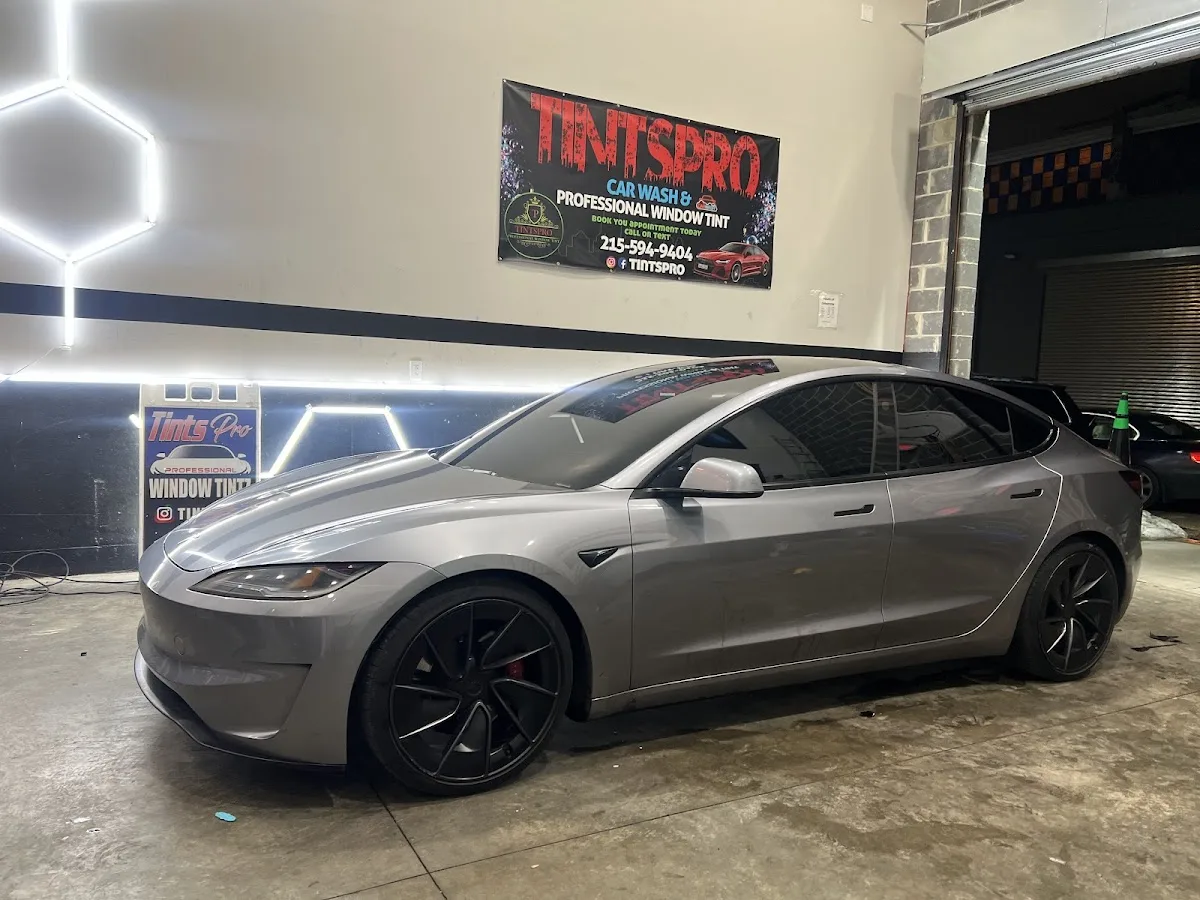
Carbon and ceramic can sound like straightforward window-tint choices, but the service names alone do not establish what product a customer would receive. TintsPro X’s website lists vehicle window tinting and separately lists ceramic coating and carbon coating. It does not identify a carbon or ceramic window-film product, manufacturer, technical specification, or package. Philadelphia drivers considering tint can use those published services as a starting point, then compare a specific written proposal rather than choosing from the labels alone.
Clarify whether “carbon” or “ceramic” means window film
Start by identifying the service being discussed. TintsPro X’s website lists ceramic and carbon coatings separately from vehicle window tinting; it does not specify that either coating is a window film. If the proposal is for tint, look for the exact film product and the windows it covers. If it is for a coating on another vehicle surface, assess it as a separate service.
Use the specific product and application to compare proposals, not broad labels that may refer to different work. A written estimate should identify the film being quoted and distinguish it from any separate coating service. TintsPro X describes vehicle window tinting, but its public service description does not specify available film products. Without a product name or documentation, treat performance as unknown rather than inferring it from “carbon,” “ceramic,” or “premium.”
Compare a named product against the driver’s priorities
Decide what matters most before comparing options: the finished appearance, a particular level of light transmission, published performance data, or the scope and terms of the installation. Ask for product literature or other documentation tied to the exact film being quoted. If comparing figures, make sure they describe the same measurement and comparable products. A broad material label is not a substitute for product-specific information, and an estimate should make clear which product its claims refer to.
Appearance deserves its own discussion. A sample may not look identical on a vehicle because glass, interior color, lighting, and existing factory tint affect the overall result. Ask to view the available sample and consider how it compares with the vehicle’s existing windows. If the driver is concerned about visibility after dark, discuss that concern before selecting a shade. A sample can help communicate a preference, but it does not by itself establish the precise finished appearance on every vehicle.
Check which windows the proposal covers. Front side windows, rear side windows, and back glass may have different existing conditions or be treated as separate parts of the work. Having the included windows stated in the estimate helps you compare the actual scope with another proposal.
Address compliance and warranty in the written scope
Before choosing a shade, check the current Pennsylvania requirements that apply to the vehicle and the particular windows under consideration. Ask how the proposed installation relates to those requirements, then verify the applicable rules independently if needed. Do not treat a product name, sample, or general assurance as proof that a specific finished window complies. This matters especially when the plan involves darker film or front windows.
Ask for warranty terms identifying what product and work are covered, the coverage period, and any exclusions or care conditions. TintsPro X’s public service description does not state a window-film warranty, so do not assume particular coverage. Review the terms alongside the identified product and installation scope before deciding.
Use the listing details to arrange the right conversation
TINTSPRO X is listed as a Window Tinting Service in Philadelphia. Its local listing gives the address as 3001 Ormes St unit 05, Philadelphia, PA 19134, and the phone number as +1 215-594-9404. The website’s service page displays the same phone number but gives a different address, 2620 Castor Ave, side entrance, Philadelphia, PA 19134. Because those location details differ, verify the correct destination and appointment arrangements before traveling rather than assuming the addresses are interchangeable.
Bring the vehicle details and your priorities to the discussion, then compare the identified film, its documented information, appearance, compliance considerations, and written terms. The decision is not whether “carbon” or “ceramic” sounds better, but whether the specific window-film proposal fits the vehicle and your needs. If the proposed service is a coating rather than window film, evaluate it separately.