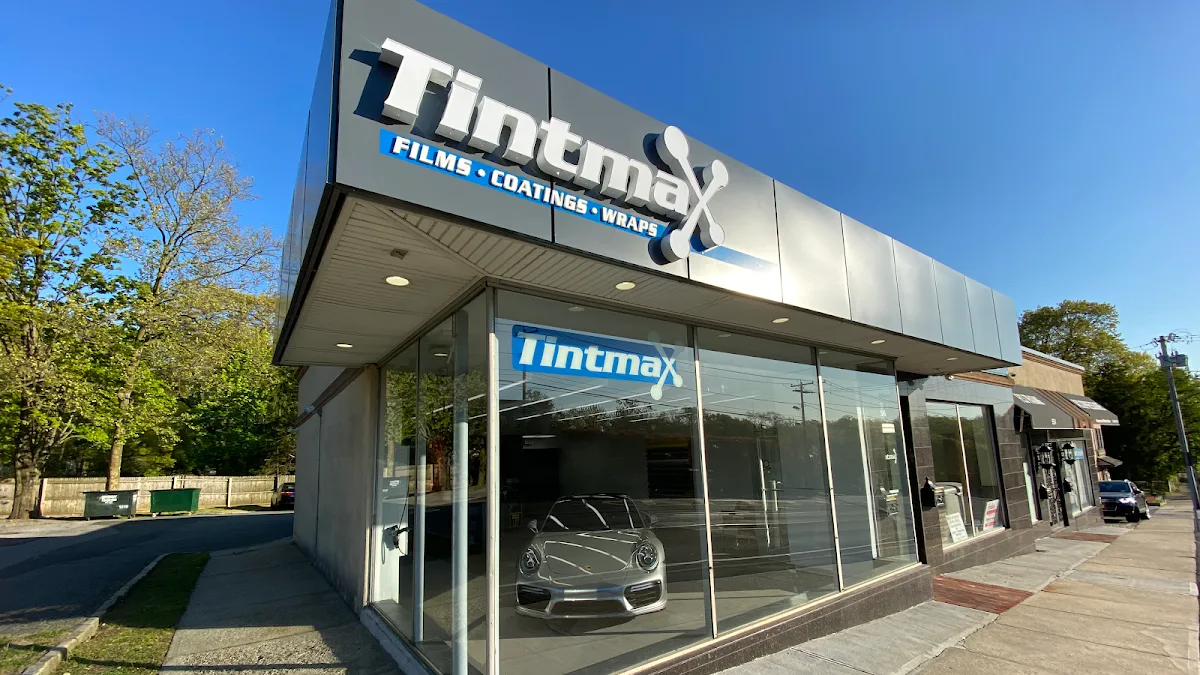
Ceramic window tint in Great Neck is a decision you can’t make on “darkness” alone. A tint that looks great in daylight can feel limiting at night if the visible light transmission (VLT) is too low for how you actually drive and where you park.
Tintmax Automotive publishes specific ceramic options and VLT tiers, which makes it easier to confirm you’re buying the right scope—not just the right color of film. Use those published categories as a baseline, then verify the exact windows covered for your vehicle before the install begins.
Confirm the film tier Tintmax is quoting (Carbon vs. Ceramic vs. Ceramic XR PLUS)
When a quote says “ceramic,” ask what that means in their lineup. Tintmax Automotive lists multiple tint categories, including Carbon Film, Ceramic Film, and Ceramic XR PLUS, with VLT percentages shown across tiers.
That tier naming matters because “ceramic” isn’t one single material stack. If you want cabin comfort for hot days and strong sun exposure, ask how the tier they’re recommending maps to your typical use—especially if you spend long hours parked or commute through high-sun areas.
Use VLT as your decision anchor, not just the daytime look
VLT (visible light transmission) is the most practical number for everyday usability. Tint can appear subtle in bright conditions while still reducing clarity at night, especially when you factor in your headlights, road lighting, and how sensitive your vision is to reduced light.
Tintmax Automotive’s listed VLT options include values such as 70%, 50%, 35%, 30%, 20%, and 5% depending on the film tier. Instead of asking what’s “the darkest,” ask what VLT they recommend for your daily driving conditions so the quote reflects safety and comfort, not just appearance.
Make the written scope match your vehicle and window configuration
Even when the VLT and film tier are correct, the job can miss expectations if the written coverage is vague. “Full tint” can mean different things depending on the vehicle and the installer’s workflow, so compare quotes by the areas actually included.
Before you approve anything, confirm the exact coverage in writing—commonly whether the quote includes front sides, rear sides, and whether windshields are in scope for your selected configuration. Tintmax Automotive’s online booking information indicates that appointment services can be selected by window configuration; treat that as a clue that your quote should reflect what you chose rather than a generic package.
Verify local credibility with Tintmax’s stated credentials—then validate the install process
Public business details don’t replace an on-site look at the process, but they give you a strong starting point for vetting. Tintmax Automotive lists its service location as 556 Northern Blvd, Great Neck, NY 11021 and phone +1 516-829-7336.
The same published details also identify IWFA Member status and a XPEL Film Certified Installer designation. Use those signals to support credibility, then follow up with practical questions about installation quality—how they handle edge finishing, how they ensure proper fit to window shapes, and what to expect after installation.
Turn a good quote into a clear acceptance test before the film goes on
When you compare ceramic tint options, your questions should map to likely failure points: adhesive performance, poor cut fit, and mismatches between the intended VLT and what gets installed.
Ask the installer to explain how they handle these items:
- Vehicle-specific window shaping: how they confirm the window contours before installing so the cut fit matches your vehicle.
- Tier clarity: how they explain the practical difference between Carbon, Ceramic, and Ceramic XR PLUS so there’s no confusion between categories.
- Documentation: whether they document the selected film tier and the stated VLT on the quote or paperwork so expectations are aligned.
Finally, tie the choice back to your comfort goals. Tint isn’t just about heat rejection and UV protection in theory—it’s about whether the final VLT feels right for your day/night usability where you live and drive.
Choosing ceramic tint with Tintmax Automotive comes down to aligning three things: the film tier they’re quoting (Carbon, Ceramic, or Ceramic XR PLUS), the VLT listed for that tier, and the written coverage that matches your window configuration. Confirm those details before installation so you get what you paid for behind the wheel.