Choosing a window film is less about picking “dark” and more about matching the film category to the outcome you care about: glare reduction, heat/IR rejection, UV protection, and how the tint will fit your exact sedan or SUV layout. Tintmax Automotive lists multiple tint tiers—carbon film, ceramic film, and Ceramic XR Plus—along with VLT availability and stated performance ranges. Because their menu is tiered, it’s a useful checklist source, but it still has to be confirmed for your specific appointment.
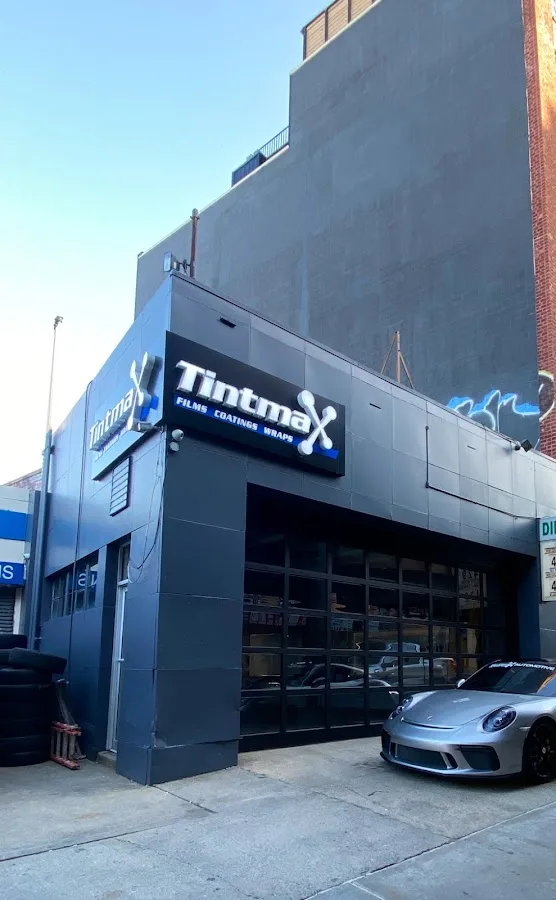 Tintmax Automotive’s published tint categories can help you pre-plan what to ask for on your install day.
Map your goal to the right film category before you book
Tintmax’s online scheduling page separates window tint options into three categories: carbon film (“Good Film”), ceramic film (“Better Film”), and Ceramic XR Plus (“Best Film”). Instead of starting with VLT alone, start with what matters most—comfort in direct sun, interior protection, or both—and then match that to the category they list for you.
Then, tie that choice to the specific glass surfaces your car has. A sedan glass set is not the same as an SUV layout, and your best “value” can depend on how much coverage is included in the quote.
What the site says each tint tier targets (and which VLT ranges are shown)
On their tint options menu, Tintmax lists different performance figures and different VLT availability by category. For customers comparing options, the practical value is that the categories are explicit:
- Carbon film: listed “up to 25% heat rejection” and “99% UV rejection,” with VLT options shown as 5%, 15%, 20%, 30%, 35%, and 50%.
- Ceramic film: listed “up to 66% heat reduction” and “up to 85% IR reduction,” plus “99% UV protection,” with VLT options shown including 70% and 80%.
- Ceramic XR Plus: listed “up to 71% heat reduction,” “up to 98% IR reduction,” and “99% UV protection,” with VLT options shown including 45%, 70%, and 80%.
Use these labels as your conversation language during scheduling. Ask the shop to restate which category and VLT target will be used for each glass area on your vehicle.
Use the New York VLT note to plan coverage by window location
Tintmax’s page also includes a New York State note referencing meter readings for common sedan and SUV scenarios, including that sedans with four doors must meter 70% or lighter for a reference point and rear glass 20% or lighter, while SUV front two windows are referenced at 70% or lighter. Treat this as a planning prompt—not a substitute for official, current rules—then verify the targets they will apply to your specific vehicle.
If the appointment booking allows you to select options by window location, cross-check that your front side windows and rear areas are set to the VLT targets you asked for.
Confirm scope in writing: category name, coverage map, and paperwork
Even when a tint menu is clear, customers can still run into scope surprises if the estimate doesn’t spell out what’s included. Before authorizing work, request a written breakdown that covers:
- Exact film category name (carbon film, ceramic film, or Ceramic XR Plus) and the VLT target for each window section.
- Coverage map: which windows are included (front sides, rear sides) and whether any additional protection is part of the same job.
- Warranty documentation: ask for the warranty paperwork tied to the specific film category selected for your vehicle.
- Existing tint handling, if applicable: removal labor is often a separate line item.
This is where published tier names help—if the shop installs “Ceramic XR Plus,” the estimate should reflect that exact label and VLT targets, not a generic description.
Local signals from the listing you can use to verify you’re booking correctly
For the Astoria area, Tintmax Automotive lists an address at 31-02 Astoria Blvd, Astoria, NY 11102 and a phone number at +1 347-519-6153. When you call or book online, reference your appointment to the correct location and ask them to confirm the film category and coverage map before you arrive.
If you’re aiming for a specific outcome—glare reduction, interior fade protection, or heat/IR comfort—bring that goal to the first call. Then ask the shop to translate it into the exact category and VLT targets they will install on your vehicle’s specific window set.