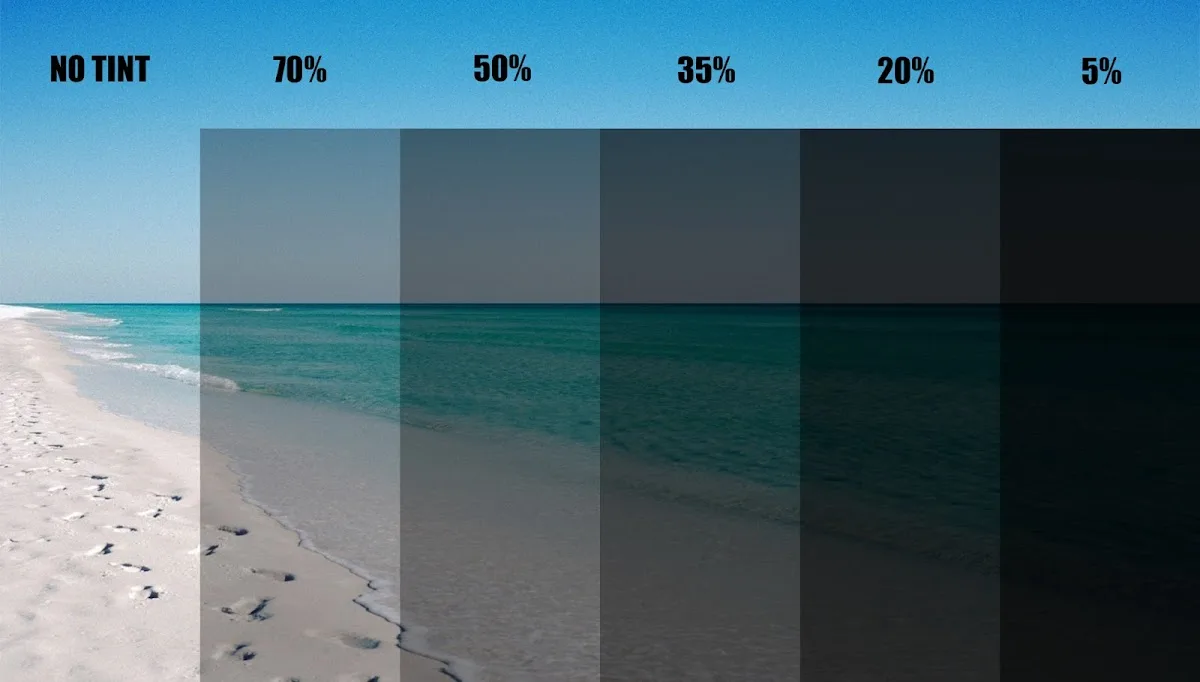
Automotive window tint is easier to compare when you separate three questions: how much visible light passes through, how the film affects solar energy, and how dark the finished glass looks to you. A low visible-light-transmission figure describes darkness; it does not, by itself, tell you how much heat the film rejects. Start with the result you want, then compare measurements that actually describe that result.
Choose the result before comparing products
“Less heat,” “less glare,” and “a darker look” are different goals. They can overlap, but a product’s performance in one area does not prove its performance in another. If the cabin feels hot in direct sun, solar-energy control may be the priority. If bright light is uncomfortable, reduced visible light may matter more. If the goal is appearance, the shade and color of the completed glass deserve close attention.
Think about the windows and conditions that matter most. A driver who spends long afternoons commuting in strong daylight may prioritize a different balance than someone who often drives on unlit roads after dark. This does not mean one tint choice fits either person automatically: it means their priorities should guide which numbers and samples they compare. Write down the main desired change before reviewing product claims so a striking darkness label does not distract from the actual problem.
Read performance figures by what they measure
Visible-light transmission, usually abbreviated VLT, is the share of visible light that passes through the glazing. Lower VLT corresponds to less visible light getting through and therefore a darker-looking result. It is a light-transmission measure, not a general score for heat control.
Total solar energy rejected, or TSER, describes the share of incoming solar energy that a specified glazing configuration keeps from passing through. It is intended to represent broader solar performance. An infrared-rejection figure, by contrast, refers to infrared wavelengths under a particular measurement method or range. Infrared is one part of the solar spectrum, so a large infrared number should not be treated as interchangeable with TSER or as a complete measure of overall heat rejection.
For a fair comparison, check what each figure represents and whether the figures refer to the same kind of glass-and-film assembly. If one option advertises VLT and another emphasizes infrared rejection, those headline numbers answer different questions. Compare like with like: VLT against VLT for light transmission, and clearly defined solar measures against the same measures for another option.
Balance darkness against usable visibility
A darker appearance generally comes with lower VLT, meaning less visible light passes through. That trade-off matters from inside the car as well as outside it. A sample that looks subtle in bright daylight may seem much darker from the driver’s seat at dusk or on a poorly lit street. Assessing a sample only from outdoors can therefore give an incomplete impression of everyday use.
Consider when you drive, how much you rely on seeing through each window, and whether your preference is primarily privacy, appearance, or daytime comfort. These are practical visibility considerations, not a substitute for checking the tint rules that apply to your vehicle and location. Avoid choosing solely by a photograph or a shade name, since lighting, surrounding glass and the viewing angle can change how a tint appears.
Compare the finished result, not an isolated film number
The existing vehicle glass contributes to the final window’s appearance and light transmission. A film’s standalone VLT therefore does not necessarily equal the result after it is paired with factory glass. The glass itself may already be tinted or otherwise affect how much light passes through, so product specifications need to be understood in the configuration they describe.
When considering alternatives, line up the same measures and the same stated configuration for each. Then view a sample in a way that approximates the vehicle’s actual glass and the conditions in which you drive. A hypothetical comparison illustrates why: if Film A has a lower VLT than Film B, it is likely to look darker, but that fact alone cannot establish which one offers the better solar performance. You need the relevant solar measure as well, plus a realistic sense of the resulting visibility.
For readers exploring local options, A1A Tint’s directory details provide a place to continue browsing. The choice itself is clearer when each claim is matched to its measure and the desired balance of appearance, solar performance and visibility.